

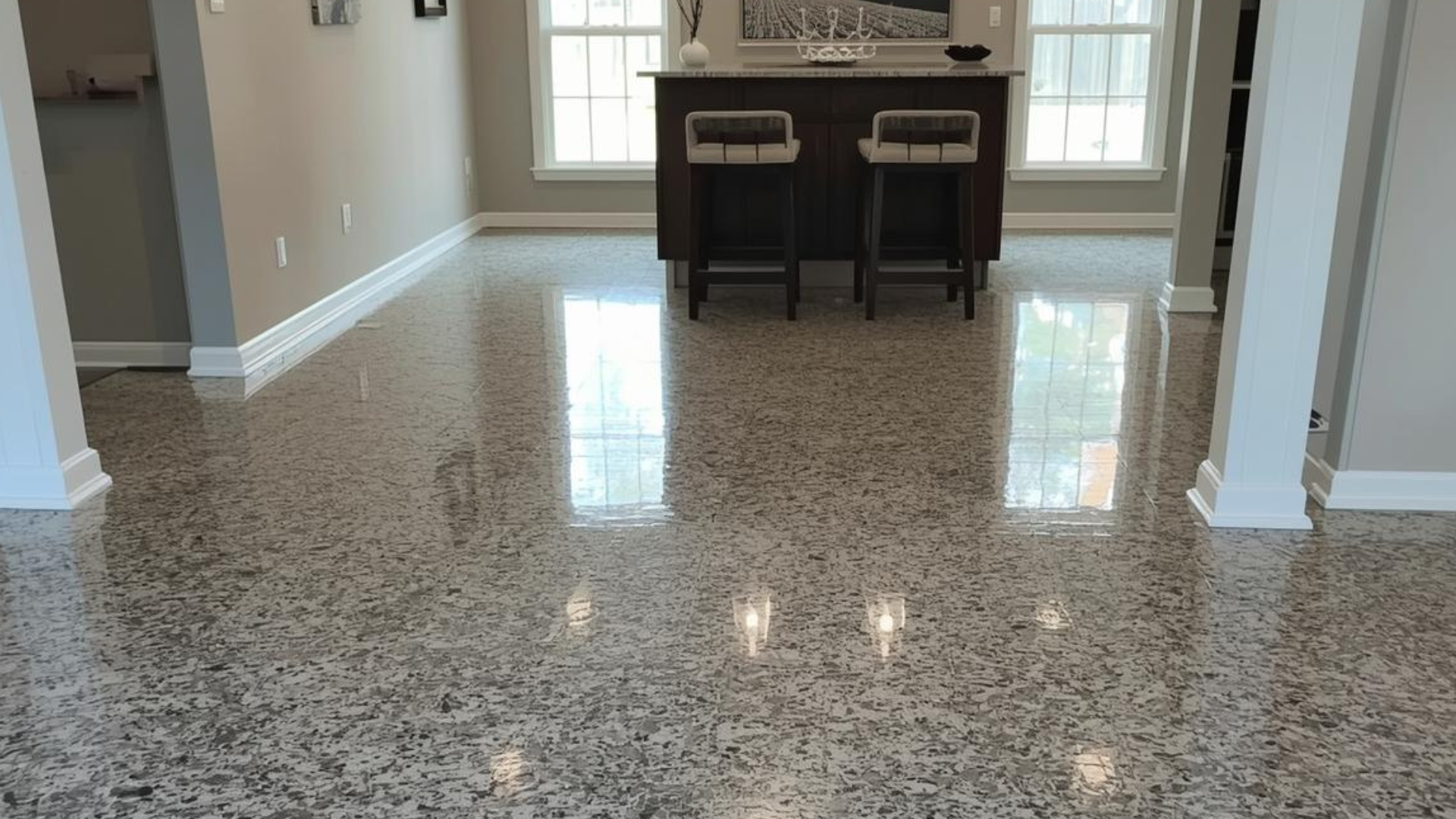
Cincinnati homeowners are using epoxy flooring to do more than protect concrete. Today’s residential epoxy floors can look like custom stone, modern terrazzo, metallic movement, or clean matte finishes that fit minimalist interiors. When the design is planned correctly and installed professionally, epoxy becomes a statement surface that also performs under daily life: pets, kids, humidity swings, and high foot traffic.
If you have searched phrases like “unique epoxy flooring,” “epoxy flooring design ideas for modern homes,” or “epoxy flooring near me,” the real question is not whether epoxy is possible in a home. The question is how to choose a design that matches your space, your lighting, and how the room is actually used, while ensuring the coating system is built to last.
Gramer Flooring provides epoxy and concrete coating solutions alongside hardwood flooring services across the Greater Cincinnati region.
What Makes Epoxy Flooring “Unique” in a Residential Setting?
“Unique” epoxy floors usually come from a blend of design choices and technical choices. Design choices include color, pattern, movement, and sheen level. Technical choices include how the slab is prepared, which primer/base coat is used, whether flakes or metallic pigments are broadcast, and what topcoat is selected for abrasion and stain resistance.
- Common residential design directions that photograph well and fit modern homes include:
- Matte epoxy flooring for a clean, low-glare look that pairs with modern cabinetry and mixed metals
- Metallic epoxy for living areas, basements, or entertainment rooms where depth and movement are a feature
- Flake systems for mudrooms, basements, or utility spaces that need texture and camouflage
- Solid-color epoxy with clean transitions for open-concept layouts
- Decorative accents such as borders, “area rug” framing, or subtle tone-on-tone patterns
These options align with the intent behind keywords like “epoxy floor pictures,” “epoxy floor images,” and “epoxy flooring design inspiration for modern homes,” but the most important factor is matching the system to the room’s function.
Where Epoxy Fits Best Inside Cincinnati Homes
Residential epoxy is commonly installed in garages and basements, but it is increasingly used in finished lower levels, workout spaces, laundry rooms, and storage areas. In Cincinnati, basements often see moisture variation and seasonal humidity swings, so the coating system must be selected and installed with the slab conditions in mind.
Rooms where epoxy typically performs best:
- Finished basements where a seamless, easy-to-clean surface helps reduce dust and surface allergens
- Laundry rooms where detergent splashes and small leaks are easier to clean without swelling or warping
- Home gyms where impact resistance and easy sanitation matter
- Workshops and hobby rooms where chemicals, paints, and tools are part of daily use
- Mudrooms and entryways where salt residue and winter grime need quick cleanup
Gramer Flooring positions itself as a one-stop resource for epoxy and other concrete finishings as well as hardwood flooring solutions, which is helpful when a project includes multiple surfaces in one remodel.
How to Choose Colors, Patterns, and Finishes That Look Modern
Modern epoxy design is less about loud color and more about intentional restraint. The most successful projects typically start with lighting and wall tone, then work toward the floor.
Practical design guidance that works well in Cincinnati homes:
- If the space has limited natural light, choose lighter neutrals or subtle metallic movement to avoid a closed-in feel.
- If the room has large windows or strong overhead lighting, consider matte epoxy flooring to reduce glare.
- If you want a “designed” look without busy movement, use a solid base with a light flake blend for controlled texture.
- If the space has bold cabinetry or dramatic wall color, keep the floor quiet and let the vertical surfaces carry the contrast.
If you want a custom look for a bar area or entertainment room, metallic epoxy can create a focal point without adding physical clutter.
For homeowners searching “unique epoxy flooring designs for small spaces,” the key is simplifying the palette and using a finish that reflects the right amount of light for the room’s size.
How Long Do Epoxy Floors Last When Installed Correctly?
Homeowners often search “epoxy resin flooring lifespan,” “epoxy floor coating lifespan,” and “how long do epoxy floors last.” Lifespan depends on the system build, surface prep, and how the space is used. A professionally installed system with proper concrete preparation and a durable topcoat will outperform thin DIY kits and poorly prepared installations.
Factors that extend epoxy floor lifespan:
- Mechanical surface preparation (not just acid washing)
- Correct moisture evaluation and priming approach
- Proper cure times between coats
- A topcoat suited to abrasion, staining, and cleaning needs
- Maintenance that avoids harsh, abrasive methods
If a Cincinnati basement sees occasional moisture or a garage sees hot-tire pickup risk, the system selection and topcoat matter as much as the design.
What Cincinnati Homeowners Should Do Before Scheduling an Epoxy Install
A successful epoxy project starts before installation day. Homeowners can reduce delays and protect results by planning the space and the timeline correctly.
Recommended pre-project steps:
- Remove stored items and identify what needs temporary relocation
- Confirm whether the slab has existing sealers, paint, or adhesive residue that must be removed
- Note any visible cracks, spalling, or uneven areas so they can be evaluated for repair
- Identify where moisture may be entering (downspouts, grading, basement humidity patterns)
Decide on the finish level (matte vs gloss) and whether you want flakes, metallics, or solid color
Gramer Flooring’s services include concrete preparation and restoration-related items such as adhesive removal and concrete preparation work, which is often the difference between a floor that looks good for a season and one that holds up long-term.
How Professional Epoxy Installation Works
A professional installation is a system, not a single coat. While exact steps vary by slab condition and selected finish, a quality process typically includes:
- Evaluation of slab condition and previous coatings
- Surface preparation to create a proper bond profile
- Crack repair where needed
- Primer/base coat selection matched to the concrete condition
- Broadcast (flakes or decorative media) or metallic effect layer as designed
- Topcoat selection to lock in the finish and provide wear resistance
This is where “epoxy floor coating contractors” and “epoxy floor installers near me” searches become meaningful: a decorative floor is only as good as the bond and the system build.
Why Hiring a Local Cincinnati Flooring Company Matters
Local installation matters because local conditions matter. Cincinnati’s seasonal humidity shifts, basement moisture patterns, and winter salt exposure affect how concrete behaves and what coating approach is appropriate. A local team is also easier to schedule for follow-up maintenance or additional phases of a remodel.
Why Gramer Flooring Is the Best Choice for Residential Epoxy in Cincinnati
Homeowners want a floor that looks intentional, cleans easily, and holds up. Gramer Flooring focuses on epoxy and concrete coating solutions as part of a broader flooring offering that also includes hardwood flooring, making it easier to coordinate upgrades across a home.
FAQS:
What epoxy flooring finish looks best in a modern home: matte or glossy?
Matte finishes reduce glare and hide minor dust patterns, while glossy finishes amplify color depth and reflect light. The best choice depends on lighting, room size, and how often the space is used.
Can epoxy flooring be installed in a finished basement?
Yes, if the slab condition is evaluated and moisture considerations are addressed. Proper preparation and system selection are critical in basement environments.
Which epoxy flooring designs work best in smaller rooms?
Light neutrals, subtle flakes, and matte finishes typically make small spaces feel larger and less visually busy.
How do I keep an epoxy floor looking new without damaging it?
Use gentle cleaners, avoid harsh abrasives, and clean grit promptly. Proper maintenance protects the topcoat and preserves the finish.
