

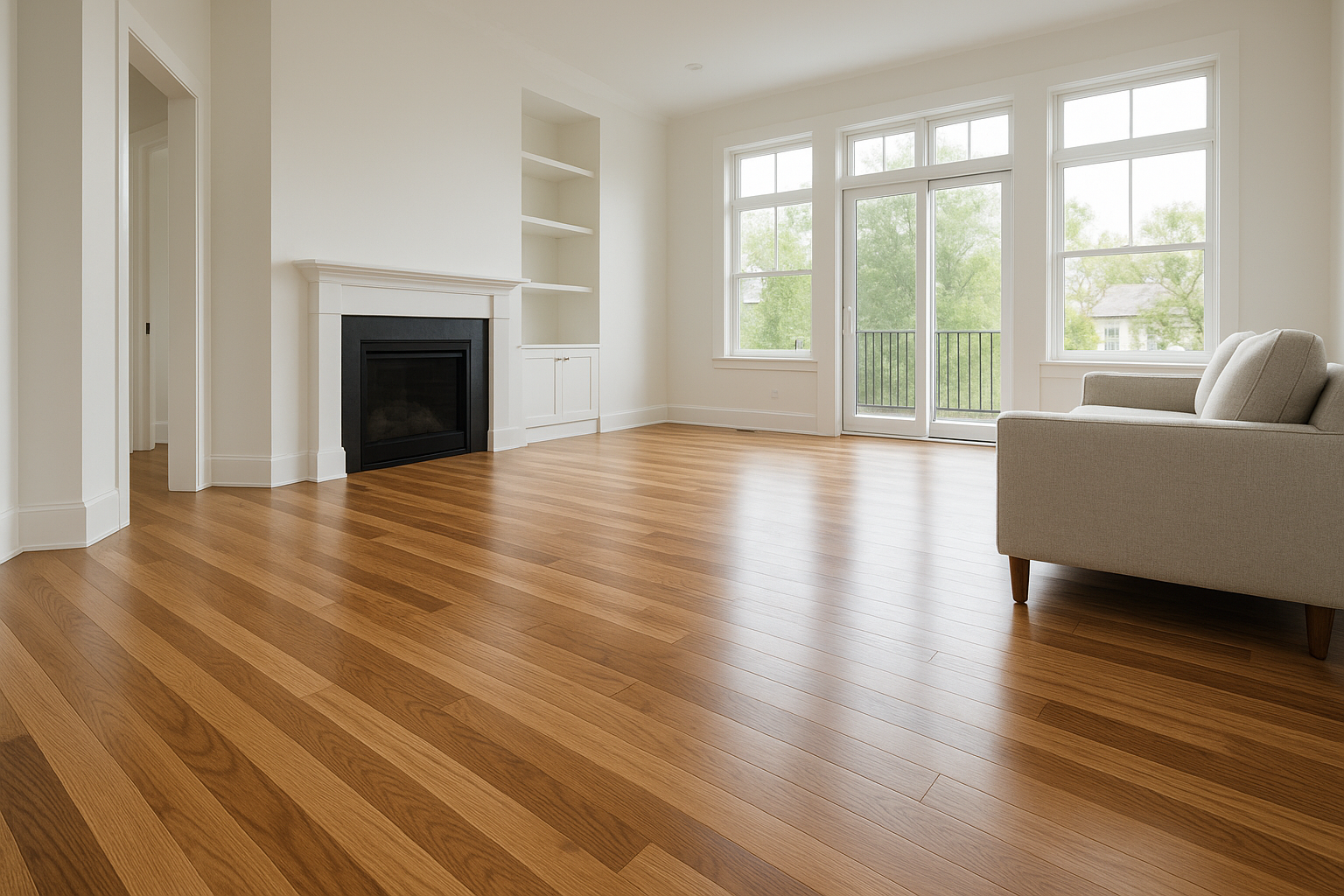
What is considered a hardwood floor?
If you are a homeowner in Madeira, OH and you are shopping for floors, this is a question that comes up a lot. In simple terms, a hardwood floor is a floor surface made from real wood, not plastic, laminate, or vinyl. But there are important differences to understand so you pick the right product for your home.
Solid hardwood vs engineered hardwood
Solid hardwood is milled from a single piece of lumber. Planks are typically 3/4 inch thick and can be sanded and refinished multiple times over decades. Solid wood is usually nailed or stapled down to a wood subfloor and works best above grade, where seasonal humidity is moderate.
Engineered hardwood has a real wood top layer glued to a plywood or high density fiberboard core. The top layer, called the wear layer, can be anywhere from a thin veneer to several millimeters thick. Engineered planks are more stable with changes in humidity, so they can be glued, floated, or sometimes installed over concrete or below grade spaces.
Both are genuine hardwood floors because they have a real wood surface. The choice between them comes down to where you are installing the floor, how long you want it to last, and how many times you might want to refinish it.
What hardwood is not
Laminate, vinyl plank, and luxury vinyl tile can look like wood, but they are not hardwood. They use photographic images and synthetic layers. If you want the look, longevity, and ability to refinish real wood, you need solid or engineered hardwood.
Practical factors for Madeira homes
Local climate matters. Greater Cincinnati area homes see humidity swings between summer and winter. Engineered hardwood often performs better in rooms that get more moisture, like basements or kitchens. Solid hardwood gives a classic feel in main living areas and hallways and can be refinished many times if you want to change stain color down the road.
Species matters too. Oak and hickory are durable and common, while maple and walnut offer different looks and hardness levels. Plank width, finish type, and installation method will also affect performance and cost.
Installation and maintenance
Hardwood installation is a skilled job. Proper acclimation, correct moisture testing, and professional installation keep boards from cupping or gapping. Maintenance is simple: sweep regularly, use manufacturer approved cleaners, and refinish when surface wear becomes noticeable.
If you want help deciding which hardwood is right for your Madeira home, Gramer Flooring can walk you through options, provide samples, and handle in-house installation. Visit gramerflooring.com to see examples or schedule a consultation.
